Marketing for small business: where to start
A plain plan for getting found, getting chosen and knowing what's working, on a small business budget.
Book a call

When you run a small business, marketing competes with everything else for your time and money, and you're competing for attention too: the ABS counted 2,814,778 actively trading businesses in Australia at 30 June 2026. The good news is you don't need to do everything. A simple marketing strategy with a few things done well will beat a long list done badly. Here's where we'd start.
1. Know your customer better than anyone
Before spending a dollar, talk to your customers. Ask a few recent ones why they chose you, what nearly stopped them and where they first heard of you. A free survey after purchase helps too. You'll find out which words to use, which worries to answer and which channels to try first.
It's also worth deciding who you're not for. Michelle Bourke, our founder, wrote in 2018: “When we say “yes” to the wrong type of customer, or we try to deliver on a brand promise that attempts to be everything to everyone, we end up delivering an excellent outcome for no one.”
2. Get the free basics right
- Google Business Profile. If you serve a local area, this is the most valuable free listing you have. Google Business Profile Help says “Local results are mainly based on relevance, distance, and popularity.” Fill in every field so Google knows exactly what you offer, add photos, keep your hours right and post updates. Reviews add to your popularity.
- Reviews. Ask every happy customer for a Google review, and reply to every review, good or bad.
- A clear website. Say what you do, where and for whom on the first screen, with your phone number and a simple way to enquire or buy. Make sure it works well on a phone.
- Tracking. Install Google Analytics and set up your enquiries and sales as conversions, so you can see what works from day one.
3. Choose one or two channels to start
Spreading a small budget across many channels leaves each one too little to work. Say you have $1,500 a month. Split across five channels, each gets $300, which is too little for any of them to show what it can do. Pick one or two, do them properly and judge them on enquiries and sales.
- If people already search for what you sell, start with Google Ads on your best searches and a local SEO plan. You'll reach people ready to buy.
- If they don't search for it yet, because it's new or an impulse buy, start with Meta (Facebook and Instagram), where great photos and video can create the want.
- If you have an email list, use it. A useful email every few weeks costs almost nothing and brings back customers who already trust you.
4. Set a budget you can keep up
Paid ads need time and enough budget to learn. A campaign that runs steadily for three months will teach you far more than one that stops and starts. In Google Ads you set an average daily budget, and Google's help page on budgets explains it can spend up to two times that on a busy day, but no more than 30.4 times it in a month. A $20 daily budget means a monthly limit of about $608. Choose an amount you can keep spending, judge it after a full quarter, then grow what works.
5. Make small improvements every month
- Look at your top pages and ask how to make each clearer or faster.
- Check which searches or ads brought enquiries, and put more behind them.
- Add a new review, photo or post to your Google Business Profile every week.
- Write a page that answers a question customers keep asking you.
When should you get marketing help?
You can do most of this yourself. Bring in help when you're ready to spend more on ads, when your tracking needs fixing, or when your time is better spent running the business. Many small businesses outsource one part first, such as Google Ads management or a website fix, and keep the rest in-house. Our pricing guide shows what agencies charge, and our free AI visibility check shows whether AI tools recommend you.
What is digital marketing?
Digital marketing is any marketing that reaches people through a screen: search engines, social media, email, websites, online video and, more and more, AI assistants. For a small business, its biggest advantage is that you can measure it. You can see who clicked, who enquired and what each sale cost, then move your money to what works.
Most small businesses still use a mix of digital and offline marketing. Signage, a flyer at the local café and word of mouth all count, and they often show up online later as someone searching for your business name. Asking new customers where they first heard about you gives the offline side its fair credit.
The main channels, explained
Here's what each channel does well, what it asks of you and how to get started. You only need one or two to begin with, so read with your own customers in mind.
Search engine optimisation (SEO)
SEO is the work of helping your website appear in Google's free results. It takes months to build, and once it's working it keeps bringing in visits without a cost per click. That makes it one of the best long-term investments a small business can make.
- Local SEO. A complete Google Business Profile, steady reviews and the same name, address and phone number across directories help you appear in the map results for searches near you. Our local SEO page goes into more detail.
- A page for each service and area. Someone searching for an emergency plumber in South Melbourne wants a page about exactly that. One clear page for each main service, and for each main area you serve, gives Google something specific to rank.
- Answers to real questions. The questions customers ask you on the phone make excellent pages and FAQs. They help you show up in Google and in AI answers.
- Links and mentions. Local news sites, suppliers, industry associations and community groups linking to you tell Google you're trusted. Our guide to backlinks explains how to earn them.
Our list of common SEO mistakes covers the problems we see most often on small business websites, and most are quick to fix.
Paid search
Google Ads puts you at the top of the results for searches you choose, from the first day. You pay for each click, so start with your most specific, ready-to-buy searches, such as a service plus your suburb, and add broader ones once those are working. Check the searches your ads appear for every week and block the irrelevant ones. Our guide to the search terms report shows how.
Social media marketing
Social media marketing covers two different jobs: posting on your own pages, and paying to show ads. Both are useful, and they suit different goals.
- Your own posts build trust with people who already follow you or check you out before they buy. Show your work, your team and answers to common questions. A couple of good posts a week, kept up for months, does more than a burst of daily posts followed by silence.
- Paid social on Facebook and Instagram reaches new people who look like your best customers, often before they've started searching. It suits products that look good on camera, local offers and things people buy on impulse. Our guide to Facebook ad creative covers what makes people stop scrolling.
- The right platforms. Facebook and Instagram suit most businesses that sell to the public. LinkedIn suits businesses that sell to other businesses. TikTok and YouTube suit products that are easy to show in a short video.
Judge social media on enquiries, sales and growth in people searching your name, as well as likes and comments. A post with fewer likes that brings in two bookings is the better post.
Email marketing
Email marketing is often the best-value channel a small business has, because you're talking to people who already know you. It works best for repeat purchases, appointment reminders, seasonal offers and staying front of mind for services people buy every so often.
- Build your list from day one. Collect email addresses at checkout, on enquiry forms and with a simple sign-up offer on your website, such as a handy checklist or early access to sales.
- Get permission. Australia's spam rules require consent from the people you email, a clear statement of who the message is from and an easy way to unsubscribe. The ACMA's guide to avoiding spam explains each rule.
- Send something useful. A tip, a new product, a seasonal reminder or a story from the business. Give each email one clear message and one clear action.
- Set up a few automatic emails. A welcome email for new subscribers, a thank-you after purchase that asks for a review, and a reminder when it's time to rebook or reorder. Once they're set up, they keep working in the background.
- Measure what matters. Open rates are a rough guide only, because some email apps load emails automatically. Clicks, replies, bookings and sales tell you far more.
Choose an email marketing platform that connects to your website or online store, so new customers join your list automatically and you can see which emails lead to sales.
Content marketing
Content marketing means creating useful material, such as guides, videos, how-to posts and checklists, that helps customers before they're ready to buy. It feeds every other channel: it gives SEO something to rank, social media something to share and your email marketing something to say.
Start with the questions you answer every week. Say a physio is asked about desk posture three times a week. A short guide and a one-minute video answer that question once, for everyone, and bring in people searching for help with the same problem.
Then make each piece work hard. One guide can become a few social posts, an email, a short video and an answer in your FAQ.
Creative marketing on a small budget
- Team up with a neighbour. Partner with a business that serves the same customers, such as a florist and a café, for a joint offer or event, and share each other's audiences.
- Run a local event or workshop. A free class, a demo night or a Q&A gives people a reason to visit and something to post about.
- Make referrals easy. Thank customers who send friends your way with a discount, a small gift or a donation to a local cause.
- Show what happens behind the scenes. Before and after photos, how something is made, a day in the life. People like seeing the people behind a business.
- Get into the local news. A milestone, a community project or a useful opinion on a local issue can earn coverage and a link to your website.
- Sponsor something your customers care about. A junior sports team or a school fete puts your name in front of local families.
Marketing that pays for itself
Every marketing dollar a small business spends should be judged on what it brings back. That means looking past clicks and likes to the numbers your accountant cares about.
- Know your margins. Work out the profit on what you sell and how much a typical customer spends with you over a year. Our margin and markup calculator helps with the first part.
- Set a target cost per customer. From those numbers, decide the most you can pay to win a customer and still make a profit. If you sell through enquiries, our cost per lead calculator turns that into a target cost per lead.
- Track every channel against it. Record where each enquiry and sale came from, and compare each channel's cost per customer with your target.
- Move money to what works. Put more behind the channels that beat your target, fix or pause the rest, and review the split each quarter.
Here's a hypothetical example. Say a South Melbourne florist makes $40 profit on an average order, and customers order three times a year. Winning a new customer for $30 in ads leaves profit on the very first order. Paying $60 per customer loses money on the first order, but the year still comes out ahead, which is why knowing repeat business matters so much.
What goes in a one-page marketing plan?
A plan you can fit on one page is a plan you'll actually use. It turns your marketing strategy into a handful of decisions you can check every quarter, and it keeps everyone in the business working towards the same goal. Write down:
- Who you're for. Your best customers, what they need and what makes them choose you.
- Your goal. A number for the next quarter, such as enquiries per week or online sales per month.
- Your channels. The one or two you're starting with, and why they suit how your customers buy.
- Your budget. What you'll spend each month, in money and in hours.
- How you'll measure it. Where enquiries and sales are recorded, and the date you'll review results.
Review the plan every three months. Keep what's working, fix what's close and drop what isn't pulling its weight.

Questions people ask
What is the best marketing for a small business?
Usually the free basics first: a complete Google Business Profile, reviews, a clear website and tracking. Then one paid channel that suits how your customers buy.
How much should a small business spend on marketing?
Spend an amount you can keep up for at least three months, so campaigns have time to learn. Start small, judge it on enquiries and sales, then grow what works.
Should I do my own marketing?
Many small businesses start that way. Get help when you want to grow faster, spend more on ads, or get your time back.
Is social media enough for a small business?
It helps, but most sales start with a search. Make sure people can find you on Google and in AI tools as well as on social media.
What is the cheapest way to market a small business?
Start with the free basics: a complete Google Business Profile, reviews from happy customers, a clear website and an email list. Then add useful content that answers the questions customers ask you every week.
Is email marketing worth it for a small business?
Usually, yes. Email marketing reaches people who already know you, costs little to run and works well for repeat sales and reminders. Get permission first and include an easy way to unsubscribe.
How long does SEO take for a small business?
SEO usually takes several months to show steady results, depending on your competition and how much work your website needs. Local SEO, such as your Google Business Profile, often moves faster.
Which social media platform is best for a small business?
The one your customers use. Facebook and Instagram suit most businesses that sell to the public, LinkedIn suits business to business, and YouTube and TikTok suit products that are easy to show on video.
Keep reading
AI for small business: what's worth using now
AI for small business: the practical ways to use AI in your marketing and operations now, how to brief it well, where it falls short and how to stay safe.
Read the guide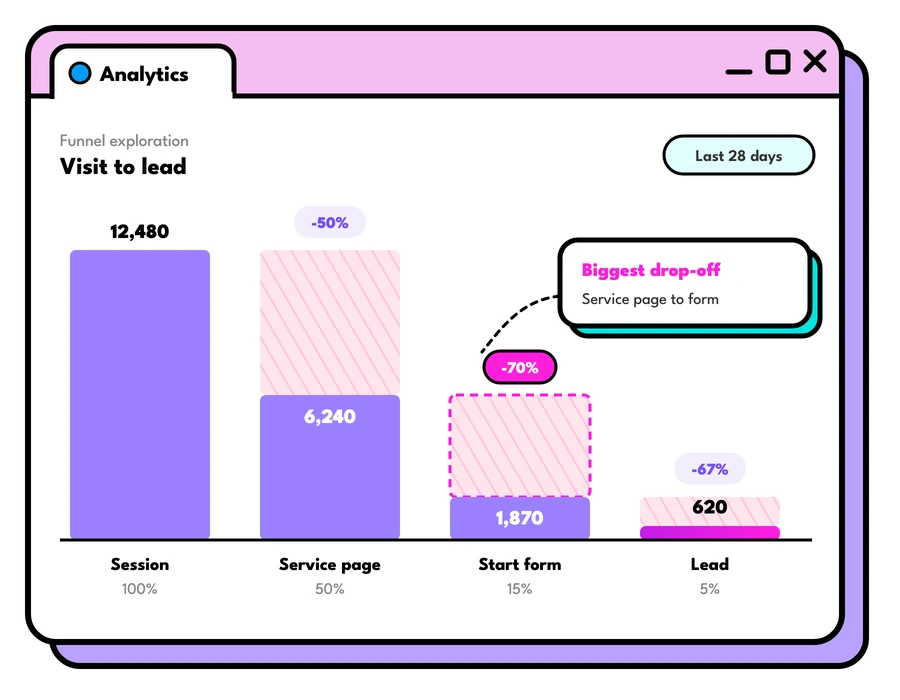
What is a marketing funnel? Stages, examples and how to build one
What a marketing funnel is, its stages, examples for lead generation and ecommerce, and how to build and measure one that brings in customers.
Read the guide
Marketing attribution, explained
Marketing attribution explained: what it is, the main models, why Google, Meta and Analytics disagree, and how to use it to decide where to spend.
Read the guideLet's talk about your goals
Tell us what you're working towards and we'll show you where we'd start.
Book a strategy call