AI CRO agency
Conversion rate optimisation that reads every visit, with Microsoft Clarity and AI. Part of the AI plan.
See the AI plan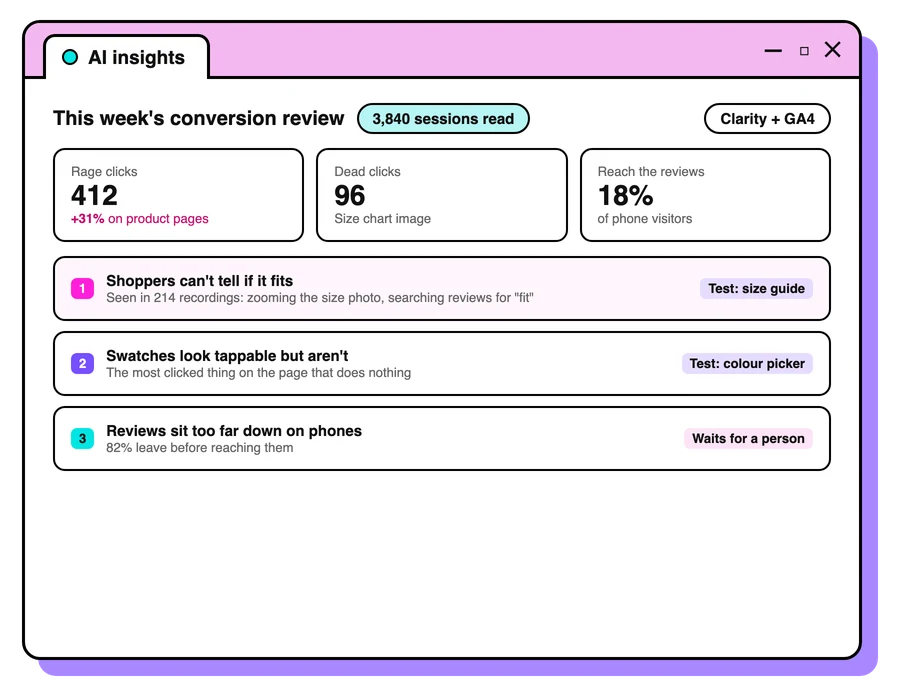

Most websites lose the sale on the page itself. Conversion rate optimisation (CRO) finds where visitors hesitate and fixes it, so the traffic you already pay for brings in more enquiries and sales. We watch how real customers use your site with Microsoft Clarity, use AI to read thousands of visits every week, design the changes, and test them against your current pages before anything is rolled out. On the product pages below, that lifted conversions by 22% to 100%. AI CRO is part of our AI plan, so it works hand in hand with your ads, SEO and tracking rather than on its own.
How we do CRO better
Good conversion rate optimisation is about more than button colours. It's about:
- Watching real visits instead of guessing: session recordings and heatmaps from Microsoft Clarity on every key page
- AI reading every recording each week, so a pattern across thousands of visits shows up in minutes
- Testing one change at a time, and running each test long enough to trust the result
- A person approving every change to your site before it goes live




More from the visitors you already have.
See the before and afters, our process, and each step in detail:
Why CRO pays
Conversion rate optimisation earns more from the visitors you already pay for. Traffic costs money every month; a page that converts better keeps working on all of it, including the traffic you add later. Lift a 2% conversion rate to 2.5% and you get a quarter more enquiries or sales from the same ads, so each one costs a fifth less.
It starts with seeing what visitors do. Microsoft Clarity records sessions and draws heatmaps, and as Microsoft puts it, “Clarity is a free service forever.” Google's Core Web Vitals set the speed a page needs: its main content shown within 2.5 seconds. Most of what stops people is simpler than speed, though: a missing answer, a hidden price, a form that asks too much.
Before and after: product pages we've tested
Each change was tested against the original page before it was rolled out.

+22%
Conversion rate and revenue lift on the product page.
+25%
Conversion lift on the product page.
+100%
Conversion lift on the product page.
+28%
Conversion lift on the product page.
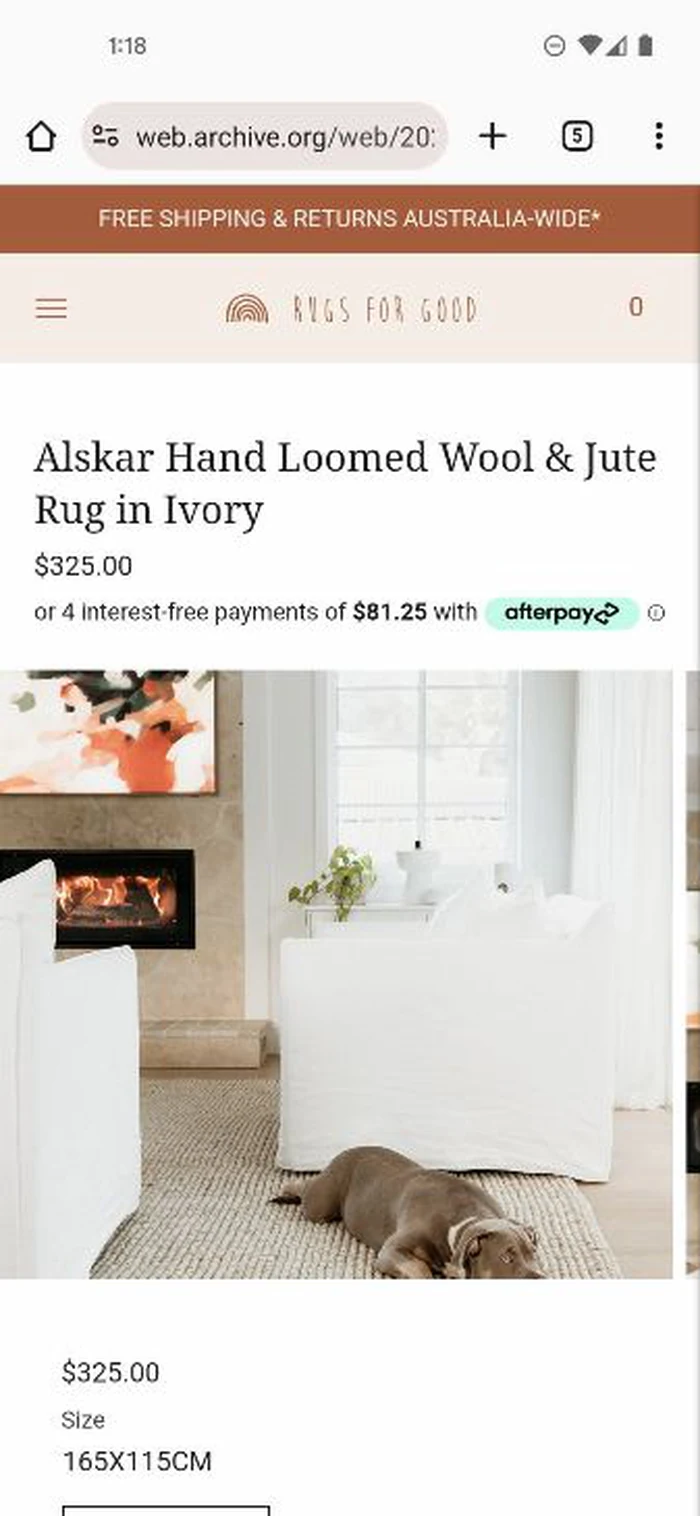
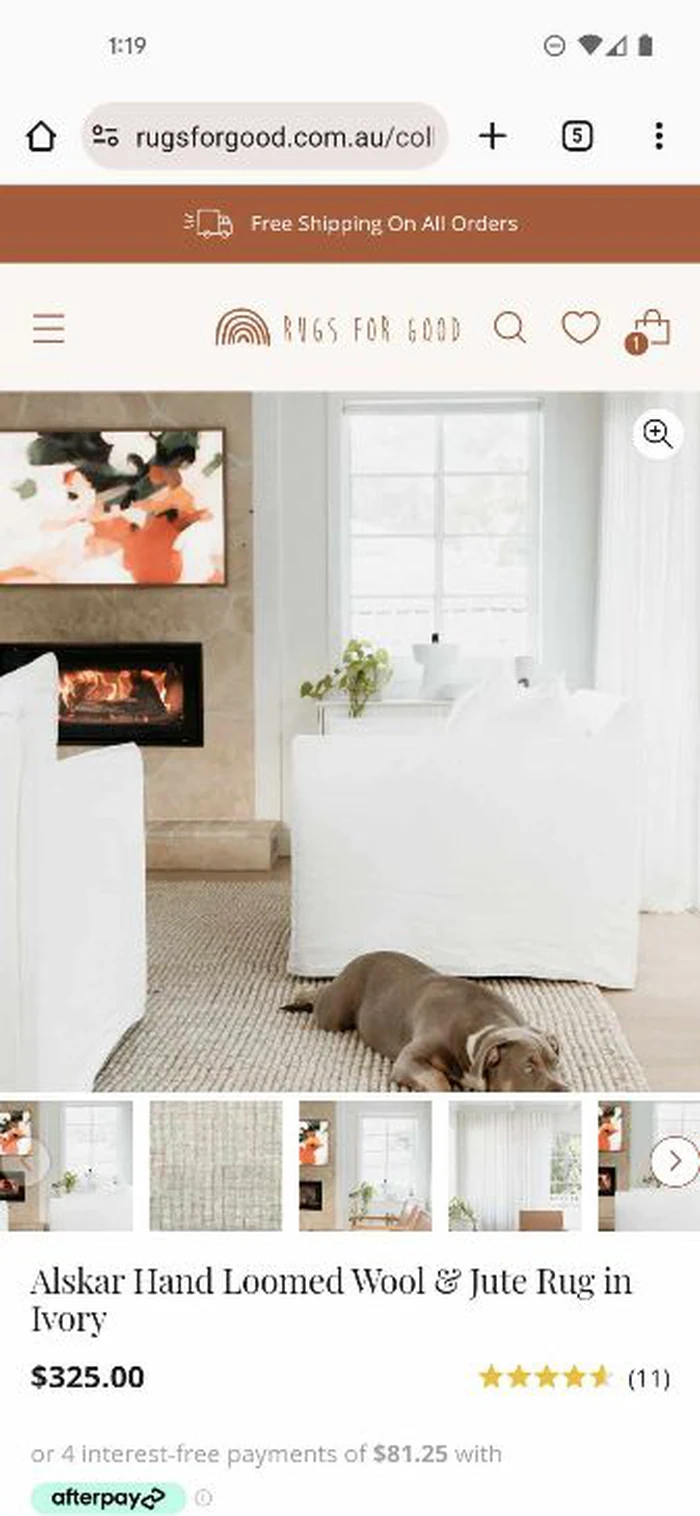
Rugs For Good
The photo comes first now, with zoom and a row of thumbnails under it, and the name, price and star rating sit right below. Free shipping is the first thing on every page. On phones, where most visits are, shoppers see the rug before anything else.
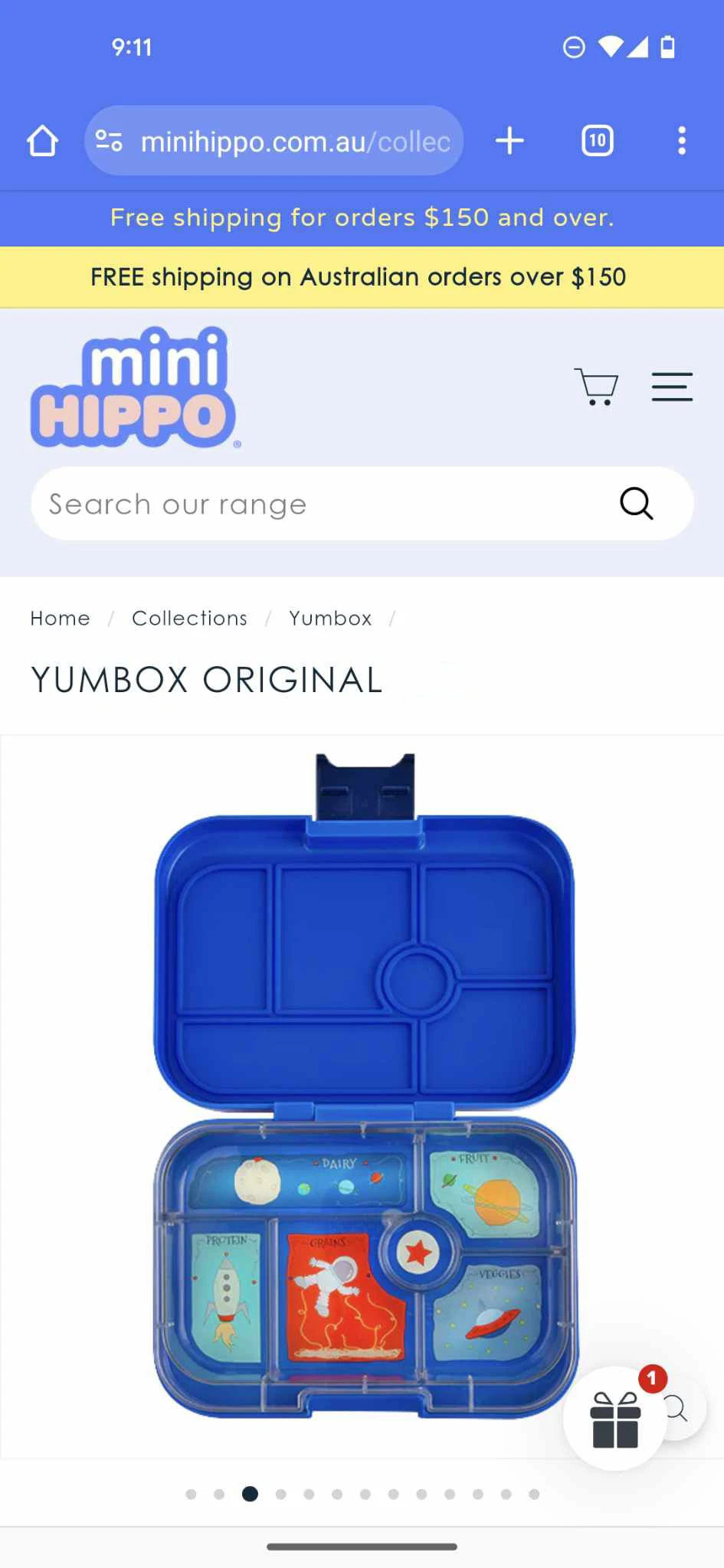
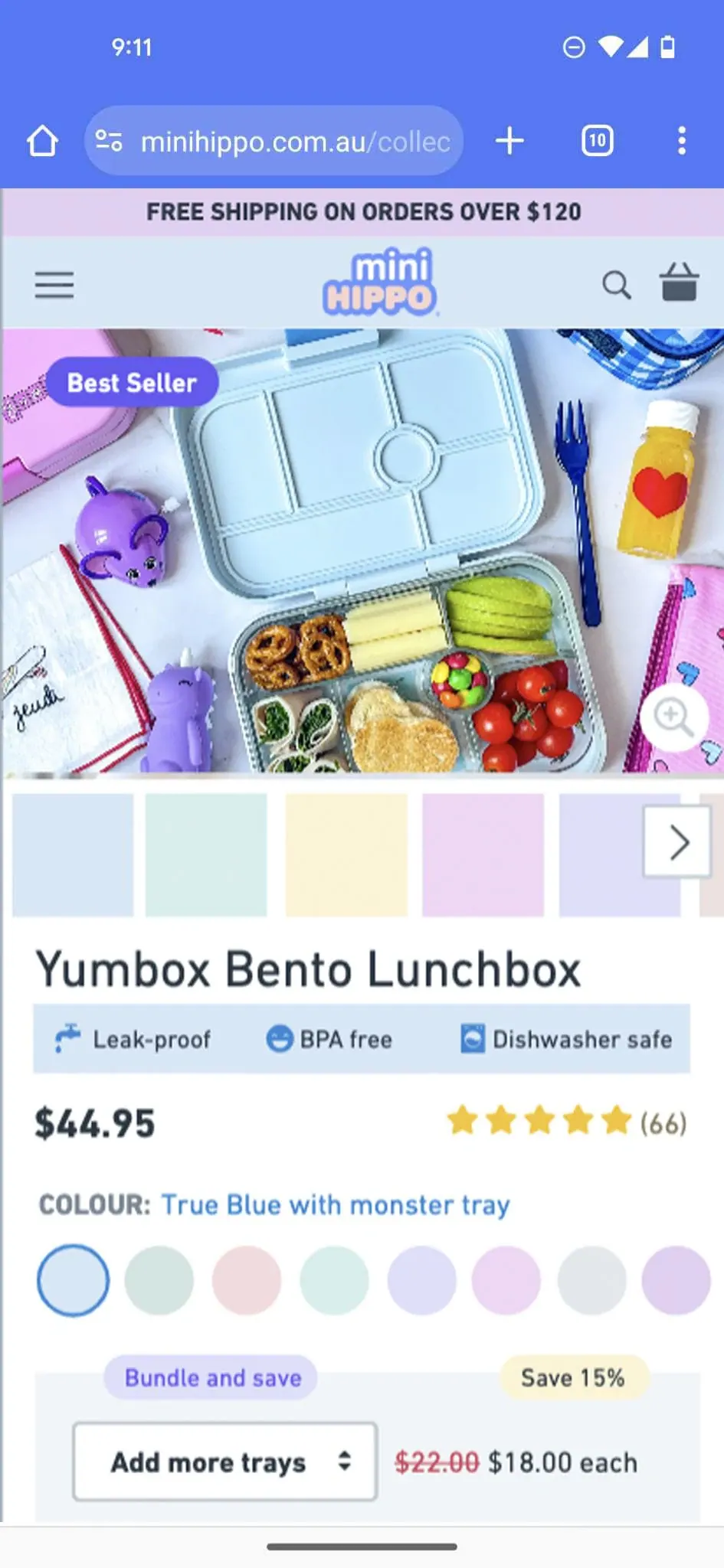
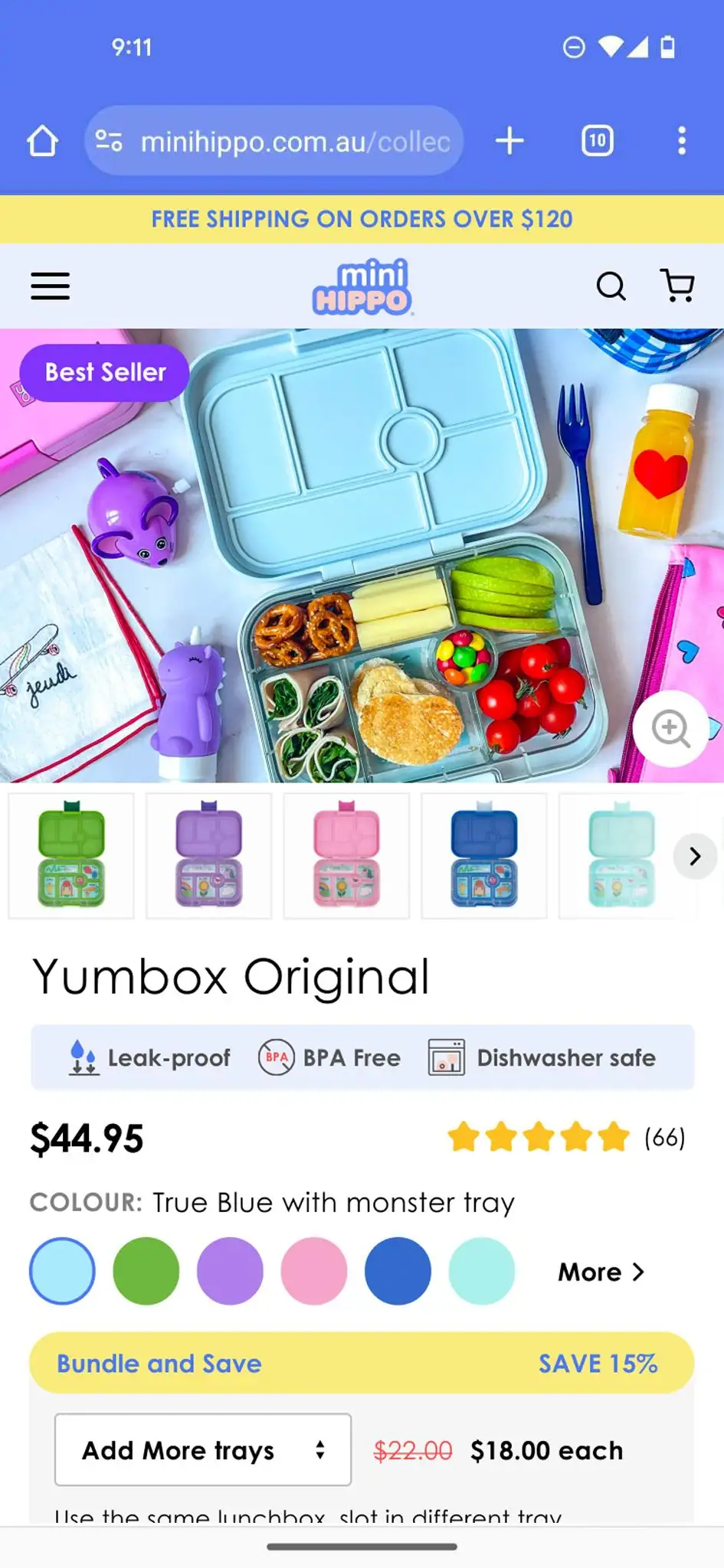
Mini Hippo
We wireframed the page before designing it. The lunchbox is shown packed and in use, with every colour as a thumbnail, the features that matter to parents (leak-proof, BPA free, dishwasher safe) as icons, the rating beside the price, and a 'bundle and save' offer for extra trays.
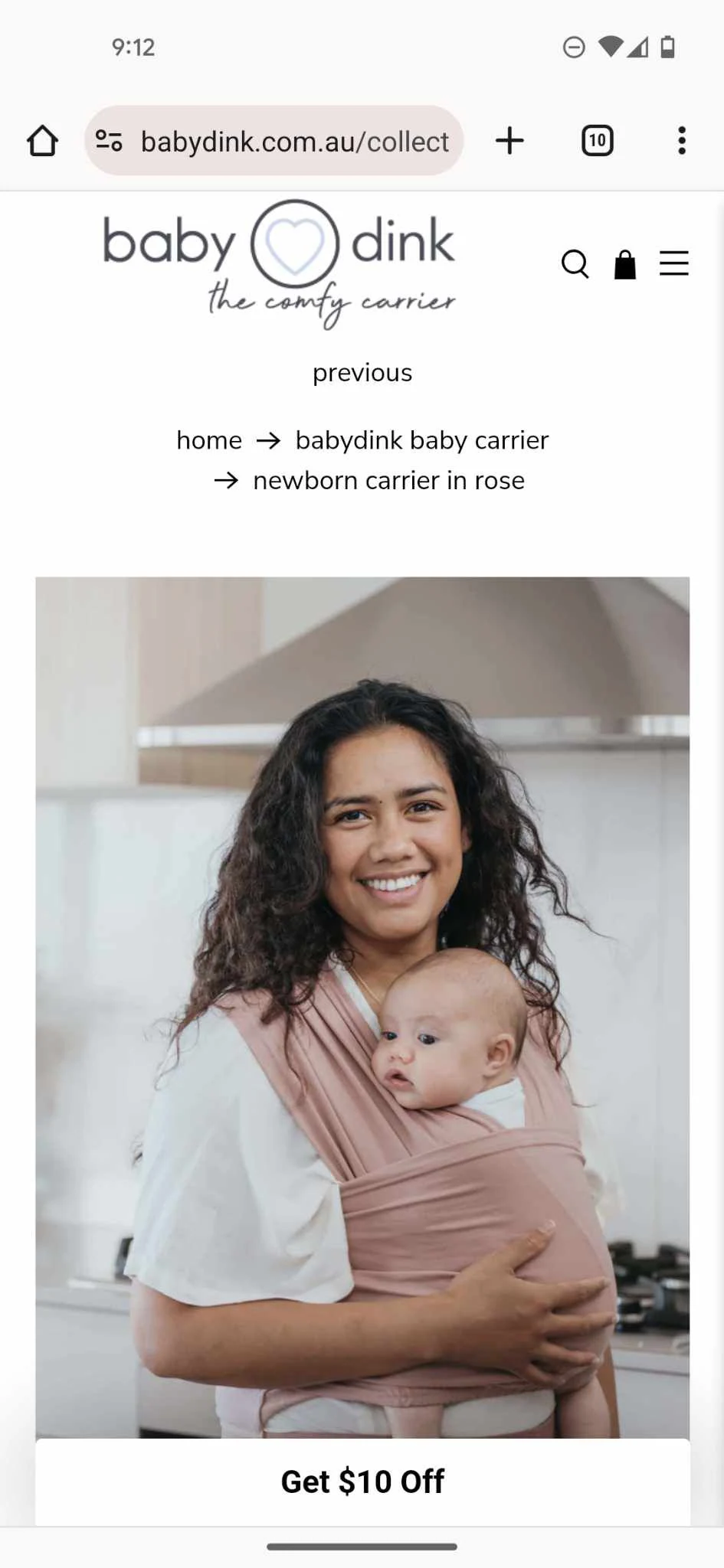
BabyDink
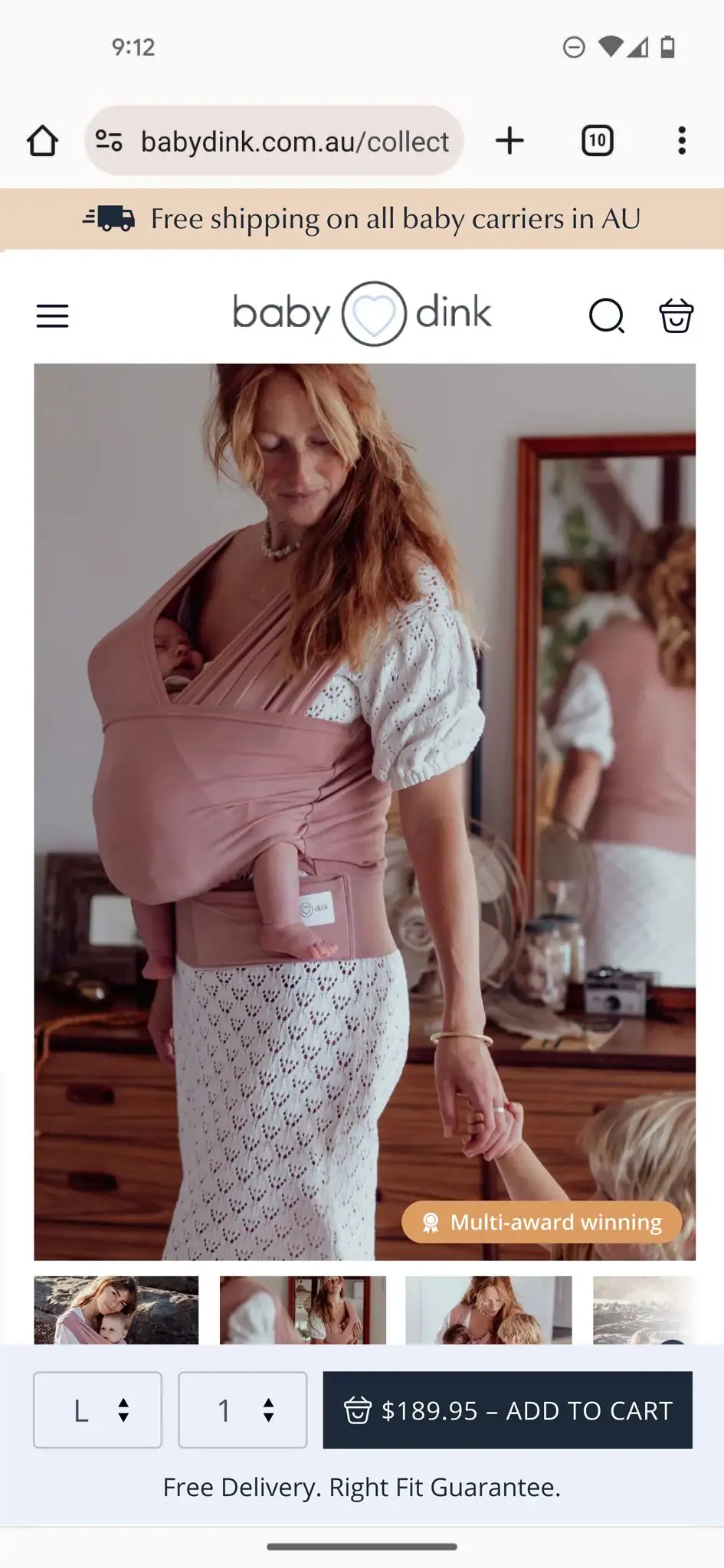
A lifestyle photo of the carrier being worn, with an award badge, a gallery under it, and size and add to cart straight after the pictures. The discount pop-up went, and 'Free delivery. Right Fit Guarantee.' answers the two worries parents have before they buy.
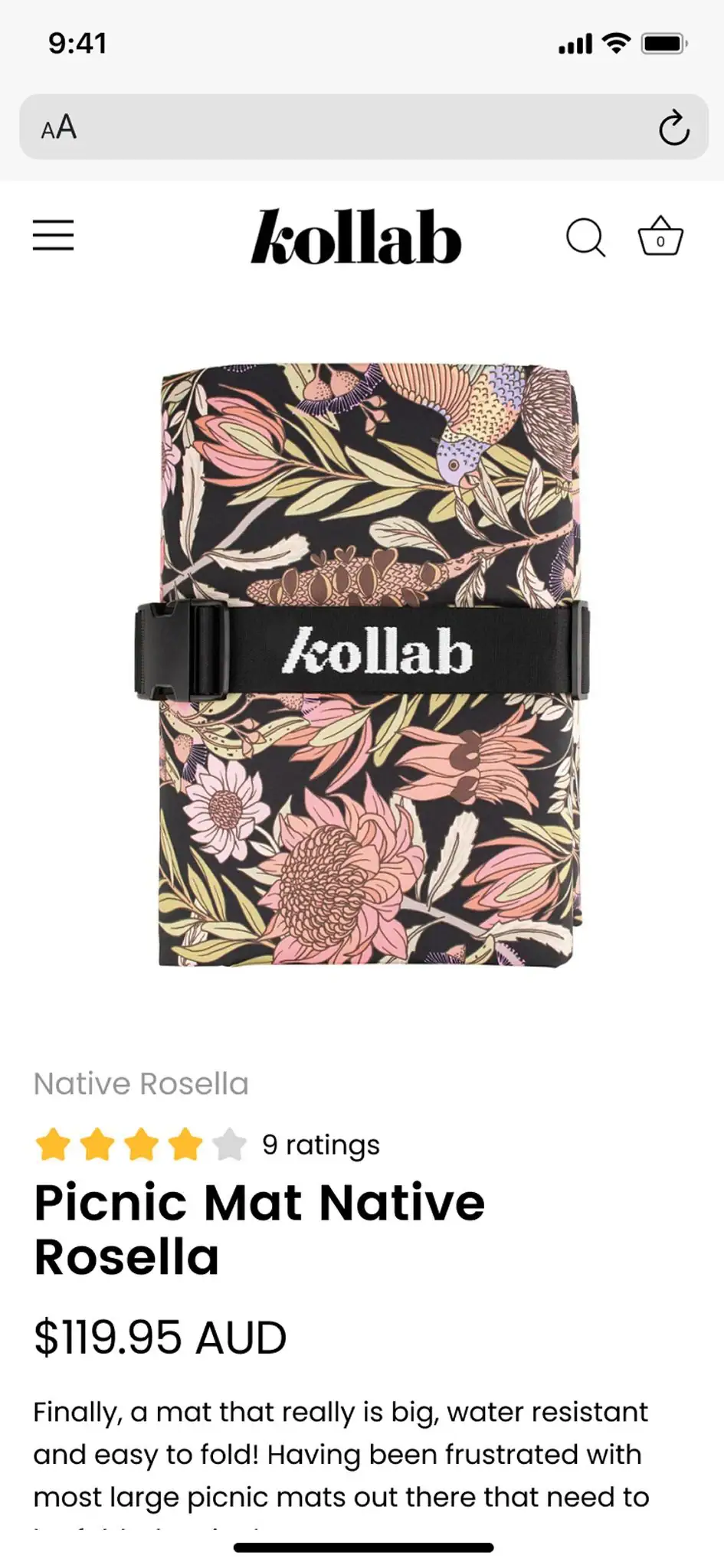
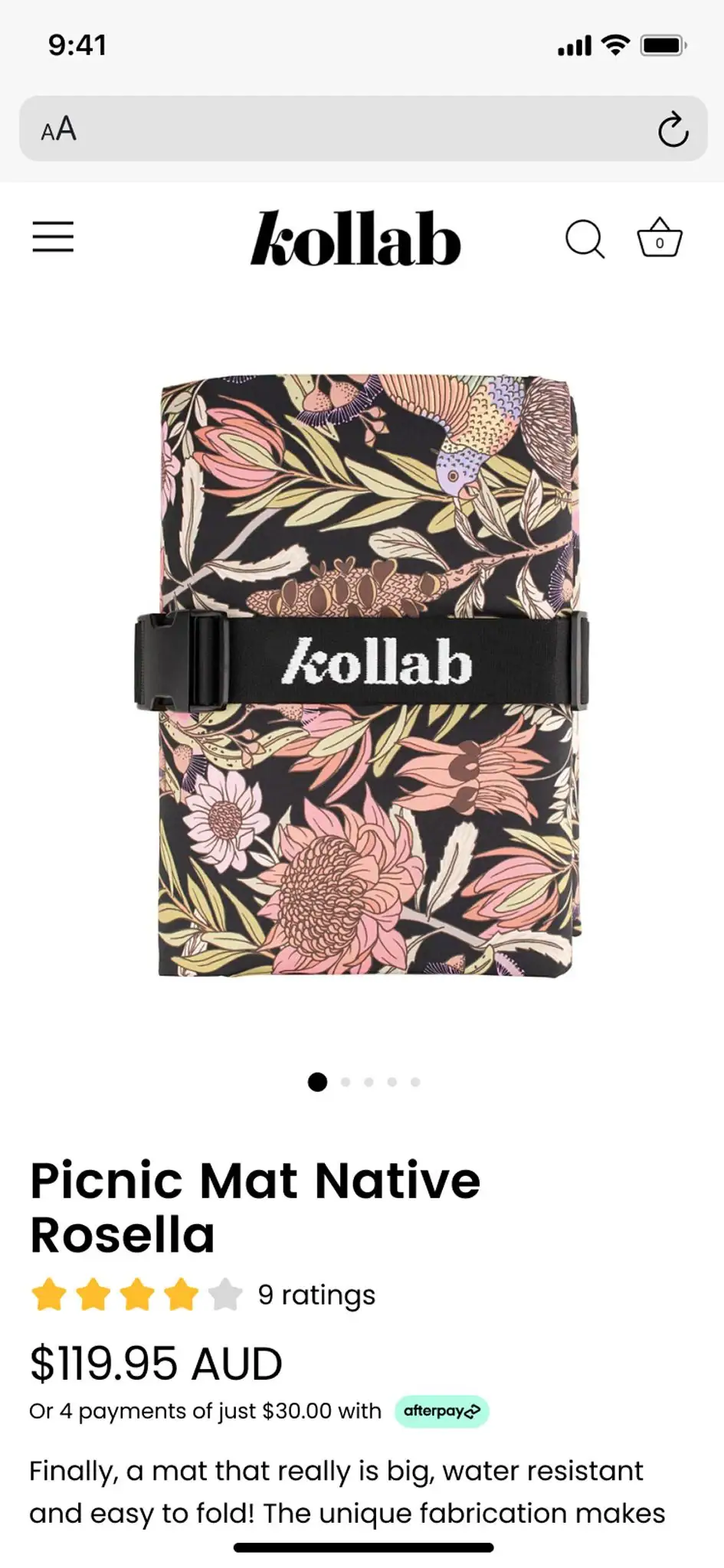
Kollab
Small tests, one change at a time: the product name above the reviews, payment by instalments under the price, and dots to show there are more pictures. Each one was tested against the original page before it stayed.
What would a better conversion rate be worth to you?
What the better conversion rate is worth
Now and after, from the same traffic
An estimate from your own numbers: the same visitors, a different conversion rate. Real lifts depend on the page, the offer and the test, so we test every change against your current page before it stays.
Calculator by Foresight Digital
Our CRO process, step by step
The same seven steps every time, so nothing changes on your site until it has been tested and has won.
Analyse
We watch how real customers use your site: Microsoft Clarity recordings and heatmaps, plus short surveys. Our AI agents read every recording; a strategist checks what they find.
Brief
A design brief with the changes we recommend and the test blocks to try first.
Design
The new pages, designed in Figma, for phones first.
Developer brief and quote
A brief your developer can build from, and their quote for you to approve.
Build
Your developer builds it (a separate cost). We review and test it before anything goes live.
Test
Test blocks in Shoplift, run against your current pages, read every 2 to 7 days depending on traffic.
Keep what wins
Winning blocks are merged, run again to confirm, then rolled out across the whole site.





Who works on your CRO
A designer, the person who runs our AI team, and the AI specialist who reads every visit. A person approves every change.

Designs every test in Figma, for phones first, from the brief and the recordings.

Manages the AI specialists, checks what they find against the recordings, and signs off each test.
 AI
Reads every recording so you don't have to: finds where people hesitate, then drafts the test that fixes it.
Microsoft Clarity on every key page
Microsoft Clarity is a free behaviour analytics tool. It records visits to your site with personal details masked, draws heatmaps of where people click and how far they scroll, and flags the moments people get stuck: rage clicks, dead clicks and quick backs.
Short on-site surveys ask customers what nearly stopped them. We install Clarity with your consent settings, connect it to Google Analytics 4, and set it up around the pages that matter: product pages, quote forms, booking pages and checkout.
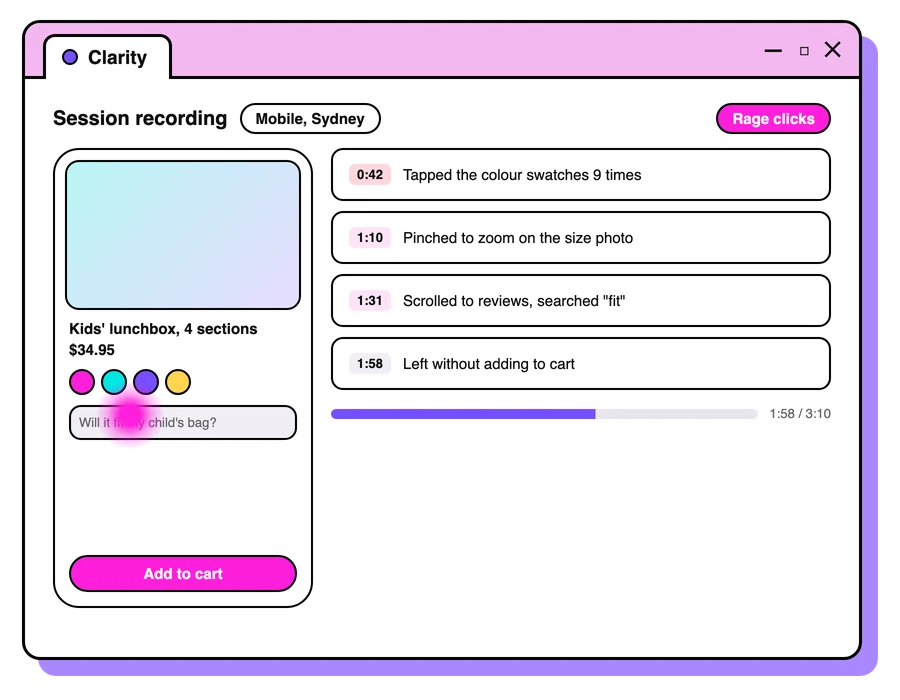
Session recordings

Real visits, played back, with typed details masked.
Heatmaps

Where people click, tap and stop scrolling, page by page.
Rage and dead clicks
The places people tap again and again, or tap things that do nothing.
Connected to GA4

Recordings filtered by campaign, device and whether they converted.
AI that reads every visit
Nobody can watch thousands of recordings a week. Our AI agents can. Each week they read the recordings, heatmaps and analytics for your key pages, group what they see into problems, rank each one by how many visits it affects and what it's worth, and draft the test that would fix it.
A strategist checks every finding against the recordings themselves before it goes on the list, so you only see problems that are real.
A weekly problem list

What's stopping people, in plain English, with the recordings that show it.
Ranked by value

The fixes worth the most come first.
A drafted test for each

What to change, what we expect and how we'll measure it.
Checked by a person
Every finding is confirmed against the recordings before you see it.
Tests that settle the question
Every change is designed in Figma first, built by your developer, then tested against your current page with Shoplift before it stays. We run one test block at a time, a gallery, a shorter form, a payment line beside the price, and read the results every 2 to 7 days, depending on your traffic.
The winner is merged and run again to confirm it holds, then rolled out across the site. The loser still teaches us something about your customers, and that goes into the next test. With less traffic, we make bigger changes and judge them on recordings and before and after results.
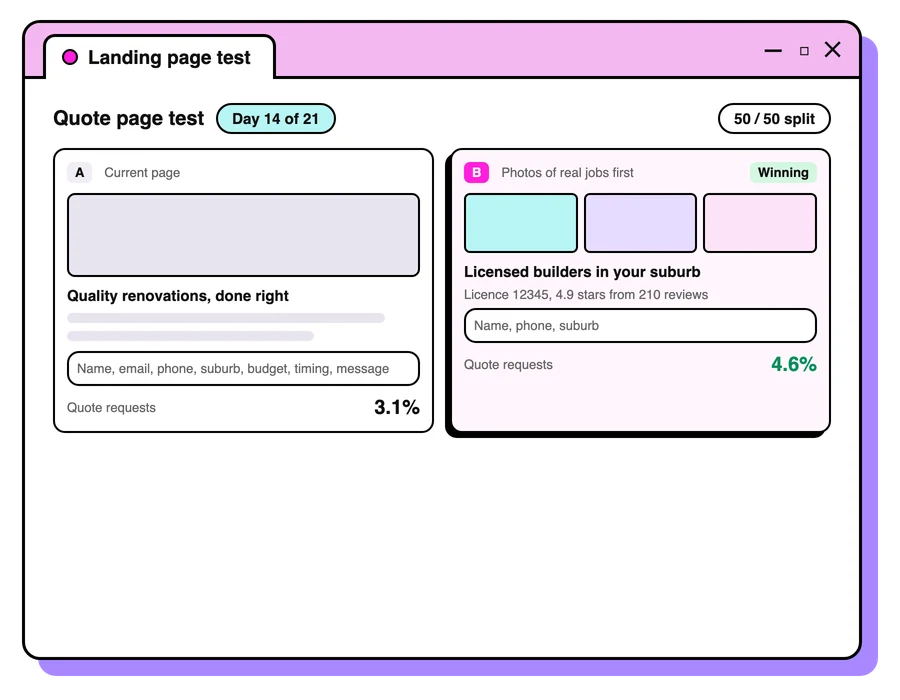
A/B tests
Two versions, split traffic, one clear winner.
Landing pages
Pages matched to the ad and the search that brought people there.
Forms and checkout

Fewer fields, clearer steps, fewer people giving up.
Phone first

Most visits are on a phone, so that's where we test first.
Measured on enquiries and sales
A test that lifts clicks but not sales isn't a win. We judge every change on the enquiries, bookings and sales in Google Analytics 4 and your own records.
Each month you get a short report: what we tested, what changed and what we're testing next, in plain English.
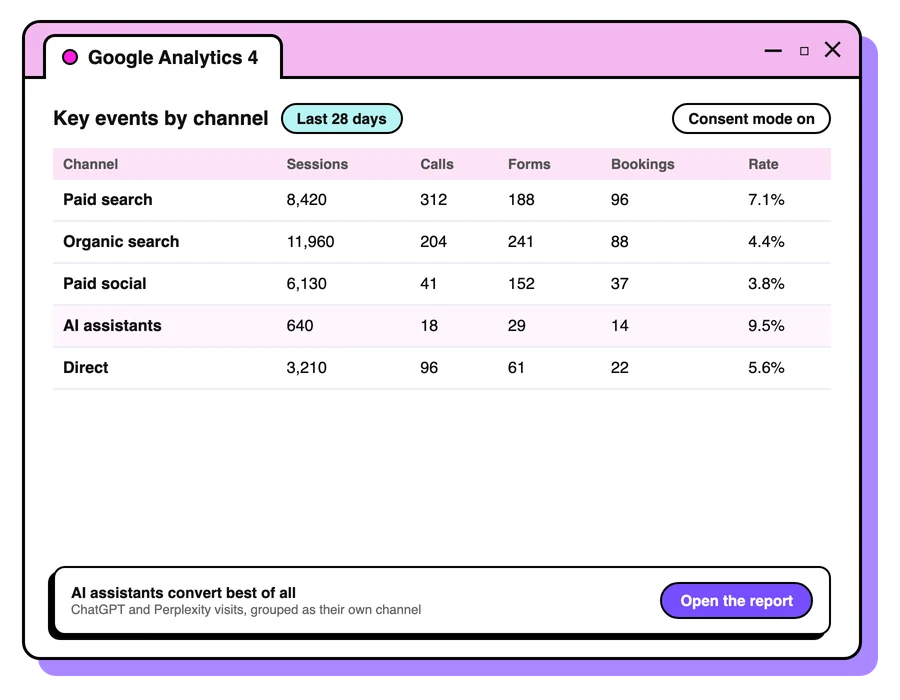
GA4 key events
Forms, calls, bookings and sales, set up and checked first.
Settled numbers

Results judged once the conversions have had time to arrive.
A monthly report

What changed and why, without the jargon.
AI CRO comes with the AI plan
Your whole marketing team, AI-powered: Google Ads, Meta, creative, SEO, tracking and AI CRO, from $10,000 a month, plus ad spend.
See the AI planWhat else is worth asking? Glad you asked!
Can I get AI CRO on its own?
No. AI CRO is part of the AI plan, alongside Google Ads, Meta, creative, SEO and tracking. Conversion work pays off most when it's joined up with the ads and search that bring people to your site.
What is conversion rate optimisation?
Conversion rate optimisation (CRO) is the work of getting more of your website's visitors to do what you want them to: buy, enquire, call or book. It means finding where people hesitate or give up, changing that part of the page, and testing whether the change helps.
What is AI CRO?
It's CRO where AI does the reading. Instead of a person watching a handful of session recordings, our AI agents read every recording, heatmap and analytics report each week and group what they see into problems worth fixing. A person checks every finding and approves every change.
Is Microsoft Clarity free?
Yes. Microsoft Clarity is free, with no traffic limit. The tool itself costs nothing; you pay for our time to set it up, read it and run the tests.
Does recording visits break anyone's privacy?
Clarity masks what people type and other sensitive details by default. We set it up with your consent settings, add it to your privacy policy, and only use the recordings to improve the site.
How long does a CRO test take?
Usually two to four weeks, depending on your traffic. A test needs enough visits to each version for the result to be one you can trust.
Do I need a lot of traffic for CRO?
It helps, but it isn't essential. With fewer visitors we make bigger changes, judge them on recordings and before and after results, and save split tests for your busiest pages.
Does CRO work for lead generation as well as online stores?
Yes. For an online store we test product pages, collections and checkout. For lead generation we test the pages people enquire from: service pages, quote forms and booking pages. Try both in the CRO calculator.