What is a marketing funnel? Stages, examples and how to build one
The path people take from first hearing about you to buying, and how to plan your marketing around it.
Book a call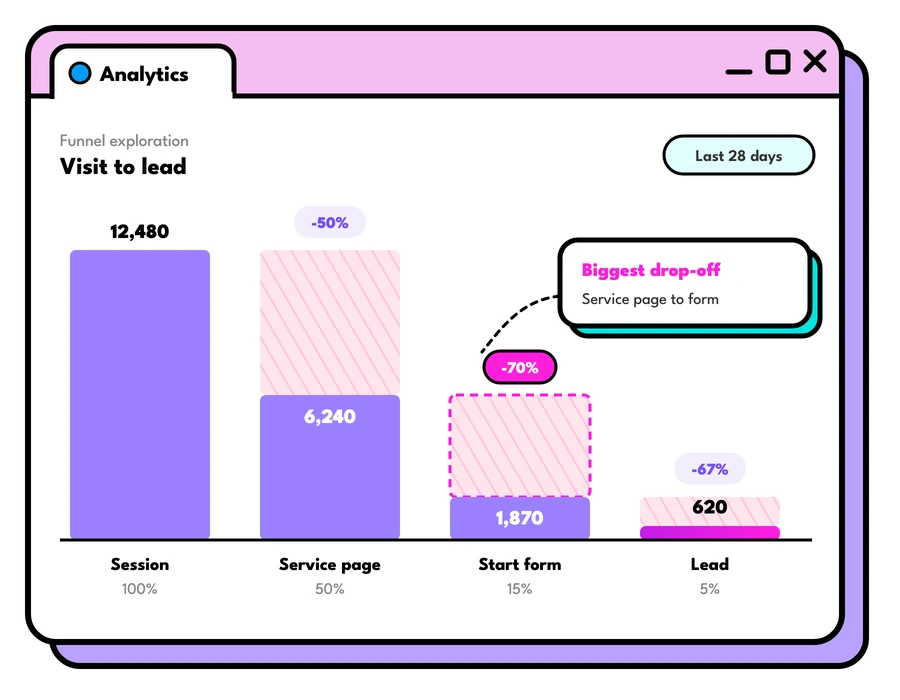

A marketing funnel is the path people take from the first time they hear about your business to the moment they buy, and ideally back again. It's called a funnel because many people start at the top and fewer reach the bottom. Planning your marketing funnel means deciding what each person needs to see, hear or read at each stage, and which channels will get it to them.
The idea is old, but it matters more now that most marketing is tracked. It's easy to pour money into whatever shows up as a sale in your reports and starve everything that made the sale possible.
The stages of a marketing funnel
Most funnels have four stages: awareness, consideration, conversion and loyalty. The names vary from one model to the next, but the jobs stay the same. Each stage needs its own content, its own channels and its own measure of success.
- Awareness. People who don't know you yet, or don't know they have the problem you solve. Your job is to be seen and remembered. Channels: video, social media, YouTube, display and programmatic, PR and AI search.
- Consideration. People comparing options. Your job is to be on the shortlist and answer their questions. Channels: search ads, SEO content, comparison and pricing pages, reviews, email.
- Conversion. People ready to act: buy, book or enquire. Your job is to make it easy. Channels: brand search, remarketing, landing pages, offers.
- Loyalty. Customers who could buy again or refer a friend. Your job is to keep them. Channels: email, SMS, account management, reviews and referral programs.
Demand creation and demand capture
The top and bottom of the funnel do different jobs. The top creates demand by making people want what you sell, and the bottom captures demand that already exists by showing up when people look for it. In 2018 Michelle Bourke, our founder, put it this way:
“Search is about meeting the available market demand for your brand or for the market category you’re in. Branding is about demand creation and forming deep emotional bonds with people.”
Search ads and SEO capture demand that already exists: someone types "plumber near me" and you show up. Video and social create demand: someone who wasn't looking sees your ad and starts to want what you sell. The two feed each other. As Michelle wrote in the same year, “Increased brand awareness equals more brand searches, and brand searches always convert at much higher rates than discovery or ‘non-brand’ searches.”
Why cutting the top of the funnel catches up with you
When budgets get tight, the top of the funnel is the first thing to go, because its sales are hard to see in a report. The trouble is the delay. Stop your awareness campaigns and nothing seems to change for a month or two, because people already in your funnel keep buying. By the third month, as Michelle has described it, you're “now 90 days behind where they should have been”: the people who would have been ready to buy were never brought in.
Keep a steady share of your budget at the top of the funnel, and judge it on the job it does: reach, engaged visits and growth in people searching for your brand.
Marketing funnel examples
A lead generation funnel
Picture a business software company. At the top, short videos and LinkedIn posts show the problem its software solves. In consideration, search ads catch people looking for that kind of software, and a comparison page shows how it stacks up. At conversion, a demo booking page asks a few qualifying questions, and the sales team calls within the hour. In loyalty, onboarding emails and a referral offer turn customers into advocates.
An ecommerce funnel
Picture a homewares brand. At the top, Meta and YouTube ads show the product in real homes. In consideration, category pages ranked in search and reviews do the convincing. At conversion, Shopping ads and remarketing bring back people who browsed, and checkout is quick. In loyalty, email brings customers back for the next season's range.
How to build a marketing funnel
- Start with your customer. Talk to real customers and to your sales or front-line team. What made them start looking, what nearly stopped them, what tipped them over?
- Write down the questions at each stage. "Is this problem worth solving?" at the top, "Which option is best for me?" in the middle, "Is this safe to buy now?" at the bottom.
- Choose the channel and the content for each question. A video for the first, a comparison page or search ad for the second, reviews and a clear offer for the third.
- Give each stage its own measure. Reach and brand searches at the top, engaged visits and leads in the middle, sales and cost per customer at the bottom.
- Check your tracking before you spend. Make sure each stage can be measured and that your reports credit the channels that started a sale as well as the ones that closed it. Our guide to marketing attribution explains how.
- Set the budget split, then test it. Shift money between stages a little at a time and watch what happens three months later as well as this month.
How to measure each stage
Use lead indicators as well as lag indicators. A lag indicator, such as sales, tells you what has already happened. A lead indicator, such as growth in brand searches or engaged visits, tells you what's about to happen while you still have time to act. A healthy funnel report shows both.
If you'd like a hand planning yours, our performance marketing team builds funnels like these every week.
Top of the funnel (TOFU): the awareness stage
At the top of the funnel, people are at the very start of their customer journey. Something has sparked a need, or they haven't started thinking about your category at all. They have little time, plenty of choice and no interest in a sales pitch yet.
Your content here should be useful or entertaining first, and about you second. Good formats include short videos that show the problem you solve, how-to guides, social posts, podcast appearances, local PR, sponsorships and being named when someone asks an AI tool for a recommendation.
- Who you're reaching: people who match your best customers, whether or not they're looking yet.
- What to measure: reach among the right people, video views past the first few seconds, new visitors to your website and growth in searches for your brand name. For bigger YouTube campaigns, a Brand Lift study surveys people who saw your ads and a similar group who didn't, then compares their answers on ad recall, awareness and consideration.
- What to avoid: judging awareness campaigns on last-click sales. Their work shows up later, in other channels.
Middle of the funnel (MOFU): interest and consideration
In the middle of the funnel, people know what they need and are weighing up how to get it. They read reviews, compare prices, ask friends and AI tools, and often visit your website several times before they decide. This is usually the longest part of the journey, especially for bigger purchases.
Your job is to get onto the shortlist and stay there. Content that helps people choose works best:
- Comparison pages and buying guides that explain the options fairly, including when yours isn't the best fit.
- Pricing pages, or at least a clear guide to what affects the price.
- Reviews, ratings and detailed examples of the work you do.
- Webinars, demos and free tools that let people try before they commit.
- Email sequences and remarketing ads that bring people back with something new to read or watch.
Measure this stage on engaged visits, return visits, time spent on key pages, email sign-ups and leads. It's also where most businesses capture contact details, so they can keep the conversation going.
Bottom of the funnel (BOFU): conversion
At the bottom of the funnel, people are ready to buy, book or enquire. They've done their research. What they need now is confidence and an easy next step, and anything that slows them down costs you sales.
- A clear offer. Say exactly what they get, what it costs or how to find out, and what happens next.
- Less friction. A page that loads quickly on a phone, a form that asks only what you need, a phone number people can tap and a checkout with as few steps as possible.
- Reassurance at the point of decision. Reviews, guarantees, delivery and returns information, accreditations and real photos of your team or product.
- A fast response. For lead generation, the speed of your reply matters as much as the ad that brought the lead in. Answer enquiries quickly and set up an instant confirmation email.
- Brand search and remarketing. Make sure you appear when people search your name, and remind recent visitors who didn't finish. In Google Ads, your data segments let you show ads to people who have already visited your website or used your app.
Measure conversion rate, cost per sale or lead, and the share of leads that become customers. Our guide to landing page best practices covers the page that does most of the work at this stage.
Map your customer journey into stages
The four-stage funnel is a starting point. Your own journey may have more steps, loop back on itself or skip a stage entirely. Mapping it shows you where people come from, what they need at each point and where you lose them.
- List the moments. Write down every step from the first trigger to a repeat purchase: noticing the need, researching, shortlisting, deciding, buying, first use and coming back.
- Note what people are doing and thinking at each one. What question are they asking? What worries them? Where do they go for answers?
- Mark your touchpoints. Which ad, page, email, phone call or person meets them at each moment? Note who in your business owns each one.
- Find the gaps and drop-offs. Look for moments with no touchpoint, and stages where your reports show people leaving.
- Fix the biggest gap first. Choose one change, measure it, then move to the next.
Here's a hypothetical example. Say a physio clinic in South Melbourne maps its customer journey. Back pain starts it. The person searches for a physio nearby or asks an AI tool, compares three clinics on reviews and availability, then books. The map shows the clinic has no online booking, so evening searchers leave for a competitor who takes bookings at 10 pm. Adding online booking fixes the biggest leak in the journey before any extra ad spend.
Capture leads in the middle of the funnel
When people take weeks or months to decide, most visitors to your website aren't ready to talk to you yet. Capturing an email address lets you stay with them for the rest of the journey, so you're front of mind when they are ready.
- Offer something worth swapping an email for. This is your lead magnet: a checklist, template, calculator, short guide or recorded demo that solves one problem.
- Keep the form short. A name and email address is often enough. Add one qualifying question only if your sales team will use the answer.
- Deliver it straight away. Send the lead magnet by email, so you know the address works and your first email lands while interest is high.
- Follow up with a short sequence. Three to five emails over a few weeks, each answering a question people have at the consideration stage, with a clear next step.
- Hand over to sales at the right moment. Agree with your sales team what signals readiness, such as booking a demo or visiting the pricing page, so warm leads get a call and the rest keep getting useful emails.
A B2B lead magnet template
Fill in each line before you build anything. If a line is hard to answer, the idea needs more work.
- Who it's for: one job title or business type, such as operations managers at mid-sized manufacturers.
- The problem it solves: one specific question they're stuck on at this stage of the journey.
- The format: checklist, template, calculator, benchmark guide or recorded demo. Choose the one that's quickest to use.
- The title: a plain promise of what they'll get, such as "The supplier onboarding checklist".
- What you'll ask for: name, work email and at most one qualifying question.
- Where you'll promote it: relevant blog posts, LinkedIn, search ads and your email signature.
- The next step: the follow-up emails, and the offer that moves people towards a call or demo.
- How you'll judge it: sign-ups first, then how many become sales conversations and customers.
Our guide to B2B lead generation covers how to reach business buyers and follow them through a long sales cycle.
Find where your funnel loses people
Every funnel loses people between stages. The aim is to find the stage that loses the most, and fix that first. In Google Analytics 4, a funnel exploration shows how many people complete each step and where they drop off, and you can define up to 10 steps. Compare each stage with the one before it:
- Plenty of reach, few website visits: your ads or content aren't giving people a reason to click. Test new creative and a sharper message.
- Plenty of visits, few leads or sales: look at the landing page, the offer and the form. Watch a few session recordings to see where people stop.
- Plenty of leads, few customers: check lead quality and how quickly your team follows up.
- Plenty of first-time customers, few repeat ones: invest in the loyalty stage with email, aftercare and a reason to come back.
How to read your funnel numbers: a worked example
Turning each stage into a number shows you where a small change makes the biggest difference. Here's a hypothetical example. Say a South Melbourne bathroom renovator tracks one month of its funnel, from the first ad someone sees to an accepted quote.
- Awareness: 40,000 people in the area see its video and social ads.
- Consideration: 1,200 of them visit the website, 3% of the people reached.
- Enquiry: 36 visitors ask for a quote, 3% of visits.
- Sale: 12 quotes are accepted, one in three enquiries.
To double its jobs, the business could double its reach, which roughly doubles its ad spend. Or it could lift the share of visitors who enquire from 3% to 4.5% with a clearer quote form and real project photos. That alone takes it to 54 enquiries and about 18 jobs from the same budget. Run the same sums on your own numbers each month, and fix the step where a small improvement moves the most.


Questions people ask
What are the stages of a marketing funnel?
Most funnels have four: awareness, consideration, conversion and loyalty. Each needs different content and channels, and its own way of being measured.
Is the marketing funnel still relevant?
People rarely move in a straight line now. They jump between stages, ask AI tools and read reviews. The funnel is still useful as a planning tool, because it makes sure every stage of the decision is covered.
What's the difference between a marketing funnel and a sales funnel?
A marketing funnel covers how people find and come to trust you. A sales funnel covers what happens once they talk to your team. In a lead generation business, the two hand over at the enquiry.
How much of my budget should go to the top of the funnel?
It depends on how well known you are and how long people take to decide. The important thing is to keep a steady share there and judge it on reach and brand searches, so it isn't cut the moment results dip.
What do TOFU, MOFU and BOFU mean?
They stand for top, middle and bottom of the funnel. TOFU is awareness, where people first hear of you. MOFU is consideration, where they compare options. BOFU is conversion, where they buy, book or enquire.
What is the difference between a marketing funnel and a customer journey?
A marketing funnel is a simple model of the stages most buyers pass through. A customer journey map is your own customers' path in detail, with every step, question and touchpoint. Use the funnel to plan your budget and the journey map to find gaps.
What is a lead magnet?
Something useful you offer in exchange for an email address, such as a checklist, template, calculator or short guide. It lets you keep in touch with people who aren't ready to buy yet.
Keep reading
Marketing for small business: where to start
Marketing for small business: where to start, what to spend first, which channels suit a small budget, and the simple tracking that shows what's working.
Read the guide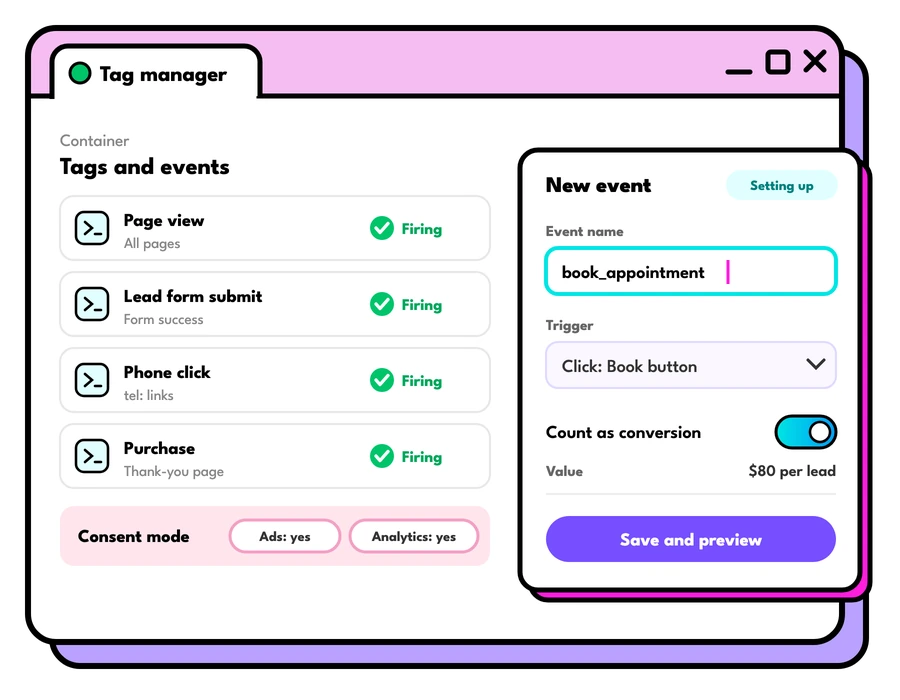
Marketing attribution, explained
Marketing attribution explained: what it is, the main models, why Google, Meta and Analytics disagree, and how to use it to decide where to spend.
Read the guide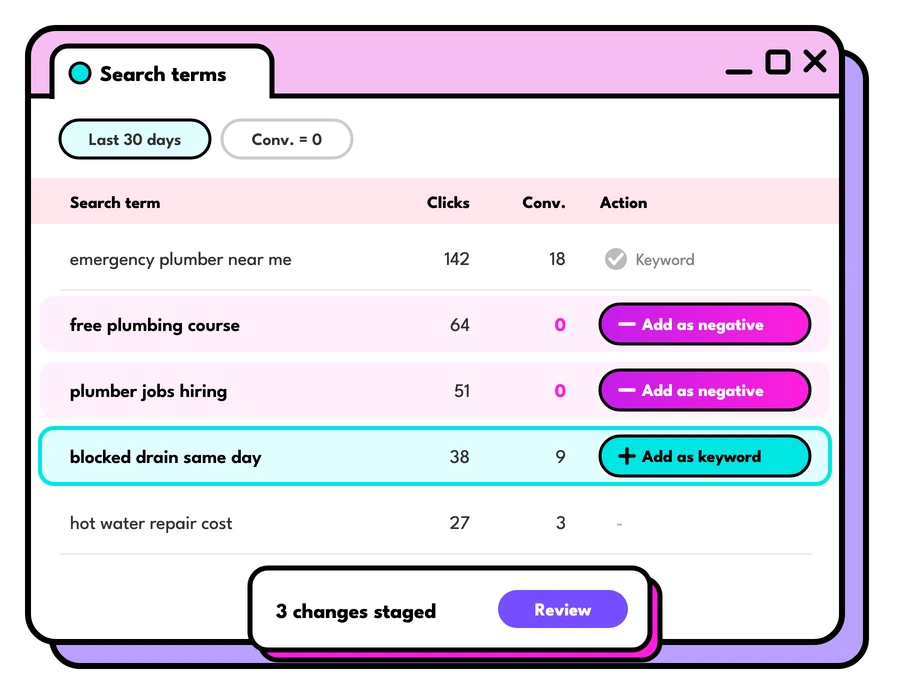
Google Ads search terms report
How to use the Google Ads search terms report to find new keywords, cut wasted spend and win more of the traffic that turns into enquiries.
Read the guideLet's talk about your goals
Tell us what you're working towards and we'll show you where we'd start.
Book a strategy call