Lead generation strategies that work
Twelve strategies we use to bring in leads that turn into customers, and to stop paying for the ones that don't.
Book a call

Most lead generation advice is about getting more leads. The strategies below are about getting more of the right ones. They come from running Google Ads, Meta, LinkedIn and SEO for lead generation businesses: software companies, builders and trades, health services and not-for-profits.
Measure the leads that become sales
1. Judge every channel on sales, as well as leads
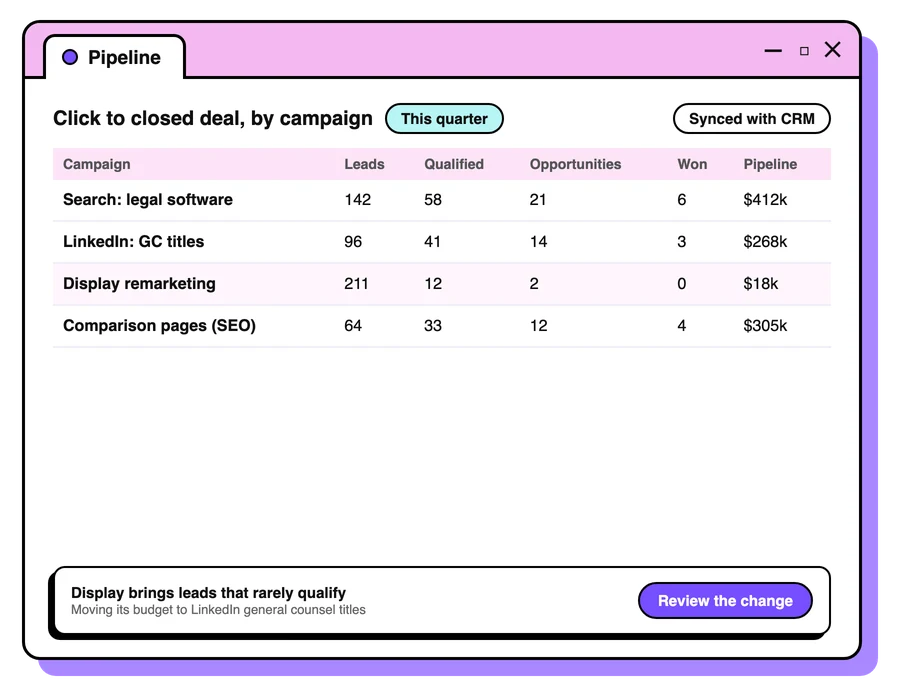
A cheap lead that never answers the phone is expensive. Connect your forms and calls to your CRM, then report on qualified leads, sales and revenue by channel. You'll often find the channel with the dearest leads brings in the most customers. Here's a hypothetical example. Channel A brings in leads at $50 each and one in ten becomes a customer, so each customer costs $500. Channel B's leads cost $120, but four in ten become customers, so each customer costs $300.
2. Clean up your conversions before you trust them
Check what your ad accounts count as a conversion. We regularly find page views, scrolls or button clicks set up as conversions alongside real enquiries. That inflates results, and it teaches the bidding to find people who scroll rather than people who enquire. Count only real leads as primary conversions, and keep everything else as secondary. Google's help page on primary and secondary conversion actions explains that secondary actions are used for reporting “but not for bidding”.
3. Read the leads themselves
Numbers hide quality. Look at the actual leads every week: are they businesses or personal email addresses, the right size, in the right area? Patterns in the junk tell you which campaigns or search terms to fix.
4. Let results settle before you judge them
Leads keep arriving in your reports days or weeks after the click. Google Ads counts a conversion up to 30 days after the click by default, as its page on conversion windows explains, so last week's cost per lead usually looks worse than it will be. Measure how long your leads take to come in, and only compare periods that have had that long. Our guide to marketing attribution explains how.
Target the people who can buy
5. Build targeting from your sales team's knowledge
Your sales team knows which suburbs, industries and job titles turn into customers. Use their lists to set your location targeting and audiences, and ask them every month which leads were good.
6. Reach people planning to move into your area
For local services such as building, real estate, schools and health care, some of your best prospects don't live in your area yet. Google Ads' default location setting, Presence or Interest, reaches people in or regularly in your area as well as people who've shown interest in it. Keep that setting for these businesses, and switch to Presence only when you need people who are physically there.
7. Give new products their own campaigns
When you add a new service to an existing campaign, it can take budget from the one that already works without anyone noticing. Launch new products or audiences in their own campaign with their own budget, so you can see what they cost and protect your best performer.
Cut the waste
8. Check your search terms every day
Search terms change daily, and AI-led campaign types match to more of them than ever. Review the searches your ads showed for in the search terms report and add the irrelevant ones as negatives. We use rules a person has signed off to apply the obvious ones straight away, and hold anything new for a person to decide.
9. Check your bid adjustments still do anything
Smart Bidding ignores most manual bid adjustments. Google's help page on bid adjustments says that if you add one to a Smart Bidding strategy, “it won’t be supported”. Your ad schedule still decides when ads run, but a higher bid on weekends or evenings does nothing. If you set adjustments like these before moving to automated bidding, check them. If certain days convert best, give them their own campaign or budget instead.
10. Keep competitor names out unless you mean them
Broad matching can show your ads for competitors' brand names. If you want to bid on competitors, do it in its own campaign and judge it on its own cost per lead. If you don't, add brand exclusions, which stop a Search or Performance Max campaign from showing on searches for the brands you list.
Make the offer worth responding to
11. Lead with the thing people came for
For an event, put the speakers front and centre. For a service, show the result people want. Creative that names the audience or the problem directly does much of the targeting for you, especially on Meta and LinkedIn.
12. Keep every price and claim up to date
"From" prices, offers and inclusions in your ads must match what you actually charge today. Update ads and landing pages the day your prices change. Out-of-date claims lose trust and, in some industries, break the law.
What's the difference between a lead and a qualified lead?
A lead is anyone who gives you a way to contact them: a form, a call, a chat or a download. A qualified lead is a lead who fits the customers you serve and has shown they're ready to talk about buying. The difference matters because your sales team's time, and your ad budget, should go to the second group.
Many businesses split qualified leads into two stages:
- Marketing qualified lead (MQL). Someone who fits your target customer and has shown interest, such as downloading a guide or visiting your pricing page several times. Marketing keeps nurturing them.
- Sales qualified lead (SQL). Someone your sales team has checked and agreed is worth a proper conversation, because they have a need, a budget and a timeframe. Sales takes it from here.
Write your own definition with your sales team. List the business types or customer types you serve, the areas you cover, the minimum job size and the signs of real intent. Then agree what happens to each kind of lead, and feed the qualified ones back into Google Ads and Meta as conversions, so the bidding learns to find more of them.
Effective lead generation starts on your website
Every ad, post and email sends people to your website, so it does more for lead quality and cost than almost any campaign setting. Small improvements to the pages people land on lift results across every channel at once.
Optimise your website for conversions
- One clear action per page. Decide what you want visitors to do, such as call, book or request a quote, and make that the obvious next step.
- Easy contact on a phone. A number people can tap, a short form near the top and a button that stays in view as they scroll.
- Short forms with one qualifying question. Ask only what your team needs to respond, plus one question that sorts good leads from poor ones, such as the type of project or the timeframe.
- Proof close to the form. Reviews, accreditations and real photos of your team and work, placed where people decide.
- Straight answers on price. A price, a range or a clear explanation of what affects the cost brings in better leads and fewer time-wasters.
- A thank-you page with a next step. Tell people when you'll be in touch, and offer something useful while they wait.
Our guide to landing page best practices goes through each of these in detail.
Use content to generate leads
Content brings in people who are still researching, and gives them a reason to come back to you when they're ready. The content that generates the most leads answers buying questions directly:
- Pricing and cost guides that explain what affects the price of your service.
- Comparison content that helps people choose between options, including different approaches to the same problem.
- Free tools and calculators that solve a small problem for your audience. Our own cost per lead calculator is one example.
- Downloadable guides and checklists offered in exchange for an email address, with a short series of follow-up emails.
Put a relevant call to action on every piece of content, and track which pages lead to enquiries. Over time, that tells you which content to write more of.
Follow up while interest is high
A lead goes cold quickly. Send an automatic confirmation the moment someone enquires, call or reply as soon as you can within business hours, and set a rule for how many times you'll try before moving a lead to a nurture email sequence. Leads who aren't ready yet can still become customers months later if you keep in touch with useful content.
How to choose lead generation strategies for your business
The right mix depends on how your customers buy. Three questions narrow it down:
- Do people already search for what you sell? If so, Google Ads and SEO capture that demand. If not, Meta, LinkedIn and content help create it.
- How long do they take to decide? Quick decisions suit direct offers and fast follow-up. Long decisions suit content, lead magnets and email nurturing over weeks or months.
- How much is a customer worth? High-value customers justify more expensive channels, personal follow-up and account-based approaches. Lower-value customers need channels that can bring in leads at a low cost and at scale.
Say a South Melbourne accountant sells annual tax and bookkeeping packages. People search for accountants when they need one, the decision takes a few weeks, and a client stays for years. That points to search ads and local SEO to capture demand, a short guide on what to look for in an accountant to capture leads who are still comparing, and fast, personal follow-up. This example is hypothetical, and the same three questions work for any business.
For business-to-business selling, our guide to B2B lead generation covers LinkedIn, long sales cycles and following leads through to a sale.
Putting it together
Start with tracking you can trust (strategies 1 to 4), then tighten targeting (5 to 7), cut waste (8 to 10) and improve the offer (11 and 12). If you'd like help, our performance marketing team runs lead generation for businesses across Australia, and our landing page guide covers the page your leads land on.

Questions people ask
What is the best lead generation strategy?
The one that brings in leads your team can turn into customers at a cost that works. Start by measuring which channels bring in sales as well as leads, and put your budget there.
How do I improve lead quality?
Count only real enquiries as conversions, ask one or two qualifying questions on your forms, use your sales team's knowledge for targeting, and review the actual leads every week.
Is Google Ads or Facebook better for lead generation?
Google catches people already searching, so leads are often closer to buying. Meta reaches people before they search and scales further. Many businesses need both. See our guide to Google Ads vs Facebook ads.
How long does lead generation take to work?
Paid campaigns can bring leads within days, but they usually take two to three months to settle and improve. SEO takes longer and keeps paying off.
What is a qualified lead?
A lead who fits the customers you serve and has shown real intent to buy, such as a need, a budget and a timeframe. Agree the exact criteria with your sales team.
What is the difference between an MQL and an SQL?
A marketing qualified lead (MQL) fits your target customer and has shown interest, so marketing keeps nurturing them. A sales qualified lead (SQL) has been checked by your sales team and is ready for a sales conversation.
How can my website generate more leads?
Give each page one clear action, make contacting you easy on a phone, keep forms short, show reviews near the form, be open about price and publish content that answers buying questions.
Keep reading
B2B lead generation: what works in Australia
B2B lead generation in Australia: reach business buyers on LinkedIn, Google and Meta, qualify leads and follow them through a long sales cycle.
Read the guide
Cost per lead Australia: what a lead costs, by industry
Cost per lead Australia: what Google Ads clicks and leads cost across 13 industries, from Australian search data, and how to work out your own.
Read the guide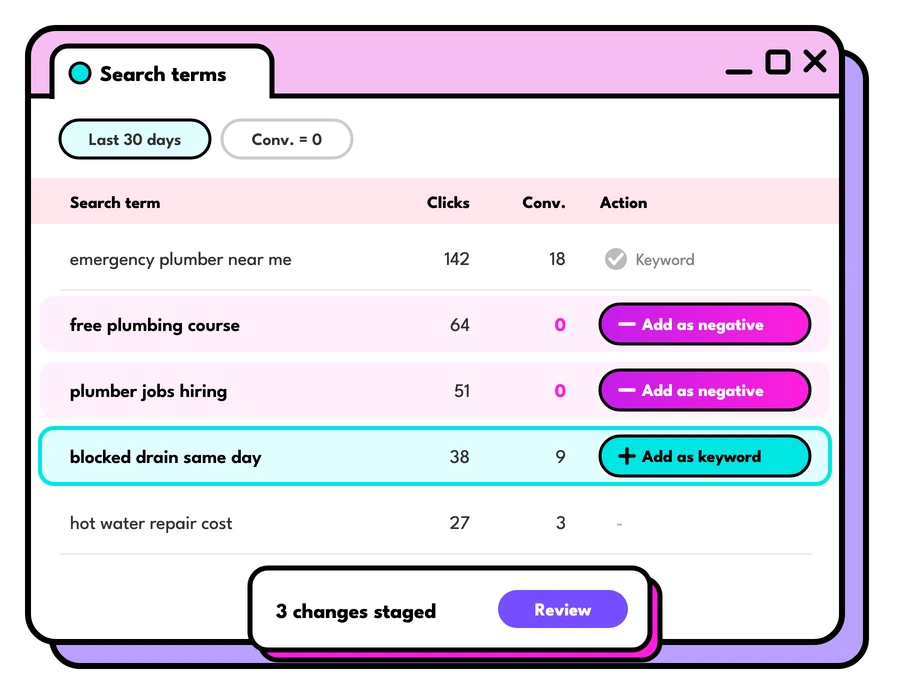
Google Ads search terms report
How to use the Google Ads search terms report to find new keywords, cut wasted spend and win more of the traffic that turns into enquiries.
Read the guideLet's talk about your goals
Tell us what you're working towards and we'll show you where we'd start.
Book a strategy call