The (slow) takeover of AI might feel overwhelming for some (even creepy), and exciting for others, but paid advertising is here to stay. E-commerce brands need to stay on the front foot with these new shake-up technologies. Our advice? Don't be spooked, be stoked!
Google’s new default ad type is the Responsive Search Ad (RSA)
This means…
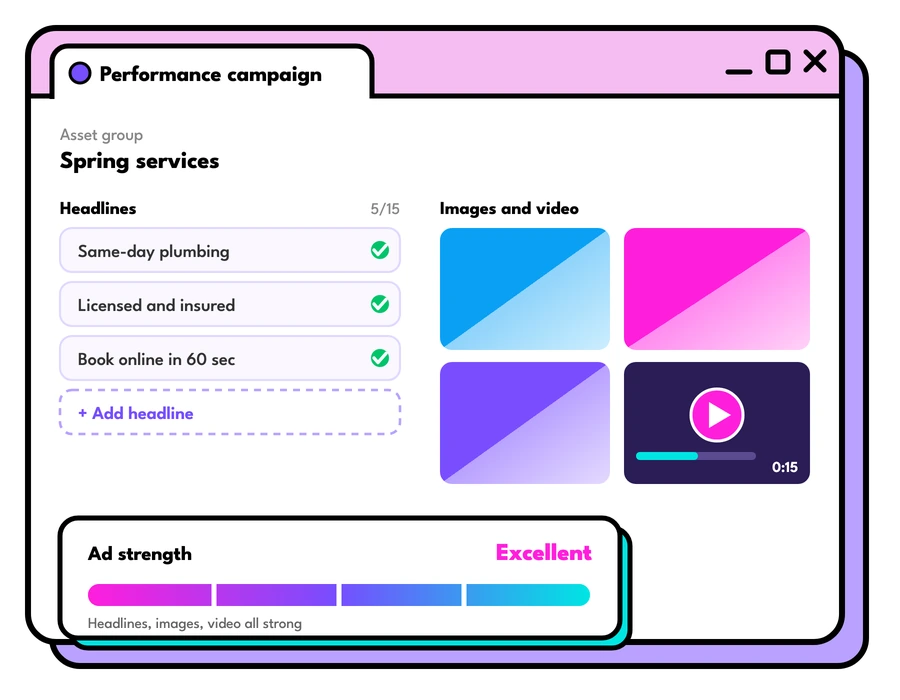
Expanded Text Ads are no more. Instead of manually writing the entire text ad, advertisers provide a variety of different text assets (headlines, calls to action and descriptions) and then Google puts these together in different combinations. Et voila… an ad is born!
The tech speak for this is: an asset-driven, machine learning-powered ad format. Given enough of these assets, Google could serve a whopping 40,000 unique variations of any given ad!!!
Each responsive search ad can hold up to 15 headlines and 4 descriptions, and Google tests different combinations to find what works best for each search.
So how do you come up with the right assets for the robots to combine? You contact us for our template which makes writing RSAs a breeze.
What is an AI ad generator?
An AI ad generator is a tool that writes, designs or animates ads for you from a few inputs, like your website, a product image or a short brief. There are plenty of standalone tools, and the ones most businesses already have are built right into the ad platforms:
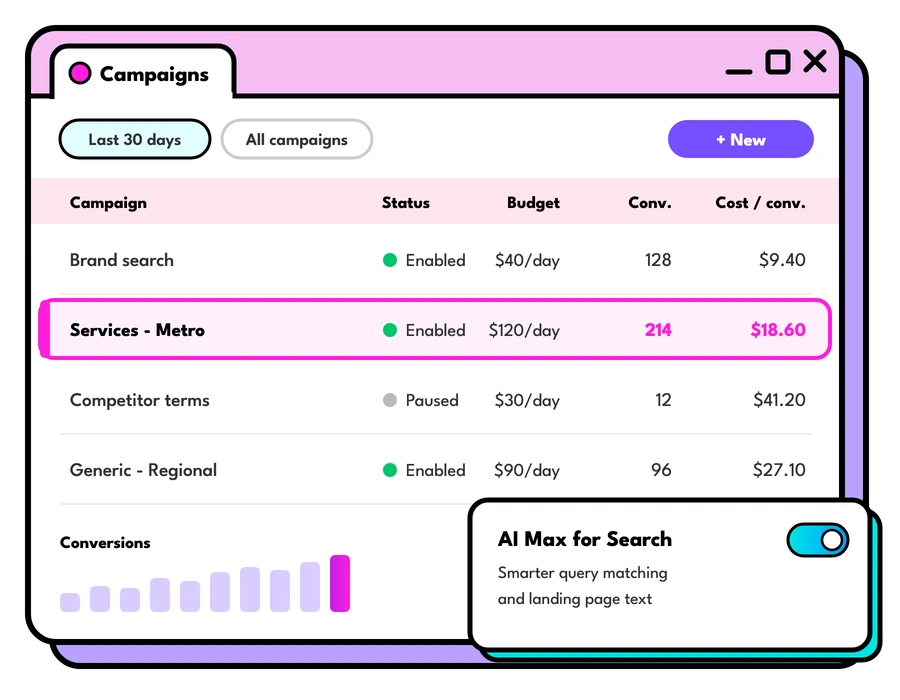
- Google Ads: Asset Studio can generate images and text for your campaigns. With AI Max for Search, which rolled out in Australia in June 2026, Google can also write headlines and descriptions from your landing pages and match your ads to searches your keywords don't cover.
- Meta: Advantage+ creative can write text variations, generate new backgrounds, expand images to fit different placements and create new versions of your image ads.
These tools are fast and getting better all the time. They work best with good raw material: clear product images, a well written landing page and a brand voice the AI can follow.
Video ads made with AI
Video used to be the hardest ad format for small teams to produce. Google has since built its Veo video model into Google Ads, and Asset Studio's create video from images option turns one or two of your images into short 5 to 10 second video ads, with music, your key message and your logo. On Meta, Advantage+ creative can animate still images into video ads for Reels and expand existing video to fit more placements.
For brands with great product photography and no video budget, that's a real chance to test video ads on YouTube, Reels and Stories. Our tip: treat AI video ads as a starting point. Simple motion around a strong product image is where these tools shine. Anything that needs real people, real use or a story still benefits from footage you've filmed yourself, including content from creators and customers.
Can I edit AI ads before they go live?
Yes, and we'd always recommend it. You stay in control in a few ways:
- Review before you publish: you can preview, edit or remove AI generated text, images and video in Google Ads and Meta Ads Manager before your ads run.
- Pin what must appear: in a responsive search ad you can pin a headline or description to a set position, so things like a disclaimer always show. Pinning reduces the combinations Google can test, so pin only what you need to.
- Set text guidelines: Google's text guidelines let you list words your AI generated copy should never use (up to 25 term exclusions per campaign) and add plain English messaging restrictions, like "don't imply our products are discounted". They work across Performance Max and AI Max for Search, and Google opened them to all advertisers in 2026.
- Switch features off: AI Max's text customisation, automatically created assets and Meta's individual Advantage+ creative enhancements can each be turned off if they don't suit your brand.
The rule we follow for our clients: AI can draft, and a person who knows the brand signs off. Check every generated claim, price and offer against your website, and keep an eye on your asset reports after launch.
What about other AI writing tools?
AI content creation means using tools powered by artificial intelligence to generate written content such as ads, website pages, and product descriptions (to name a few).
The content is pulled from a multitude of online sources, but there's a catch - it's not always clear where the information came from, or even if it's entirely accurate.
Does using AI generated content go against Google’s guidelines? Not on its own. Since February 2023, Google’s guidance has been that it rewards helpful content however it’s made. But content generated mainly to manipulate search rankings breaks Google’s spam policies, and if Google’s web spam team pick up on it, your website can be penalised.
Before that change, in 2022, John Mueller, Google’s Search Advocate, put Google’s position on auto generated content like this: “For us it’s still automatically generated content, and that means for us it’s still against the Webmaster Guidelines. So we would consider that to be spam.” The Webmaster Guidelines have since been renamed Google Search Essentials.
AI writing tools can be helpful, but they're not meant to replace humans. Search engines prefer human-written content that provides an enjoyable experience for readers and customers, while also striking a healthy balance with SEO best practices. You can use AI tools to research a topic, brainstorm ideas, or combat writers block. But make sure you keep that human touch.
How will AI change the face of paid advertising to come?
Let’s take a closer look at other new technologies that are making waves in the world of AI.
AI-powered voice assistants
Google Assistant and Amazon Alexa are becoming more popular with people increasingly using voice search to find what they're looking for online, and this trend is only set to grow.
Google's AI assistant, Gemini (formerly Bard), and AI search
Instead of the usual list of links, we can now talk to an AI bot and get direct responses to our queries. Google's AI Overviews and AI Mode bring the same idea into Search itself, so we can refine our searches with a more human-like conversation. And the ads have followed: ads can show in AI Overviews in Australia, and in October 2026 Google started scaling ads in AI Mode here too.
Chatbot advertising
These AI-powered tools use natural language processing to understand what people want and give personalised responses to help them find what they need. Advertisers can leverage them to engage with consumers in real-time conversations.
While paid search is still important, advertisers need to adapt their strategies for this new era of search.
It's unclear whether this new way of searching will replace traditional search down the track, but one thing is for sure: it's an exciting development that's changing the way we interact with search engines.

Keep reading
Google Ads cost in Australia
What Google Ads cost in Australia and how to set your daily budget: how Google spends it, what changes the cost per click, and where to start.
Read the guide
Google Ads vs Facebook ads: which first?
Google Ads vs Facebook ads: how they differ, which to start with for your business, how to set each up to work, and how they help each other.
Read the guide
AI for small business: what's worth using now
AI for small business: the practical ways to use AI in your marketing and operations now, how to brief it well, where it falls short and how to stay safe.
Read the guideLet's talk about your goals
Tell us what you're working towards and we'll show you where we'd start.
Book a strategy call